This wasn't built to be a feature
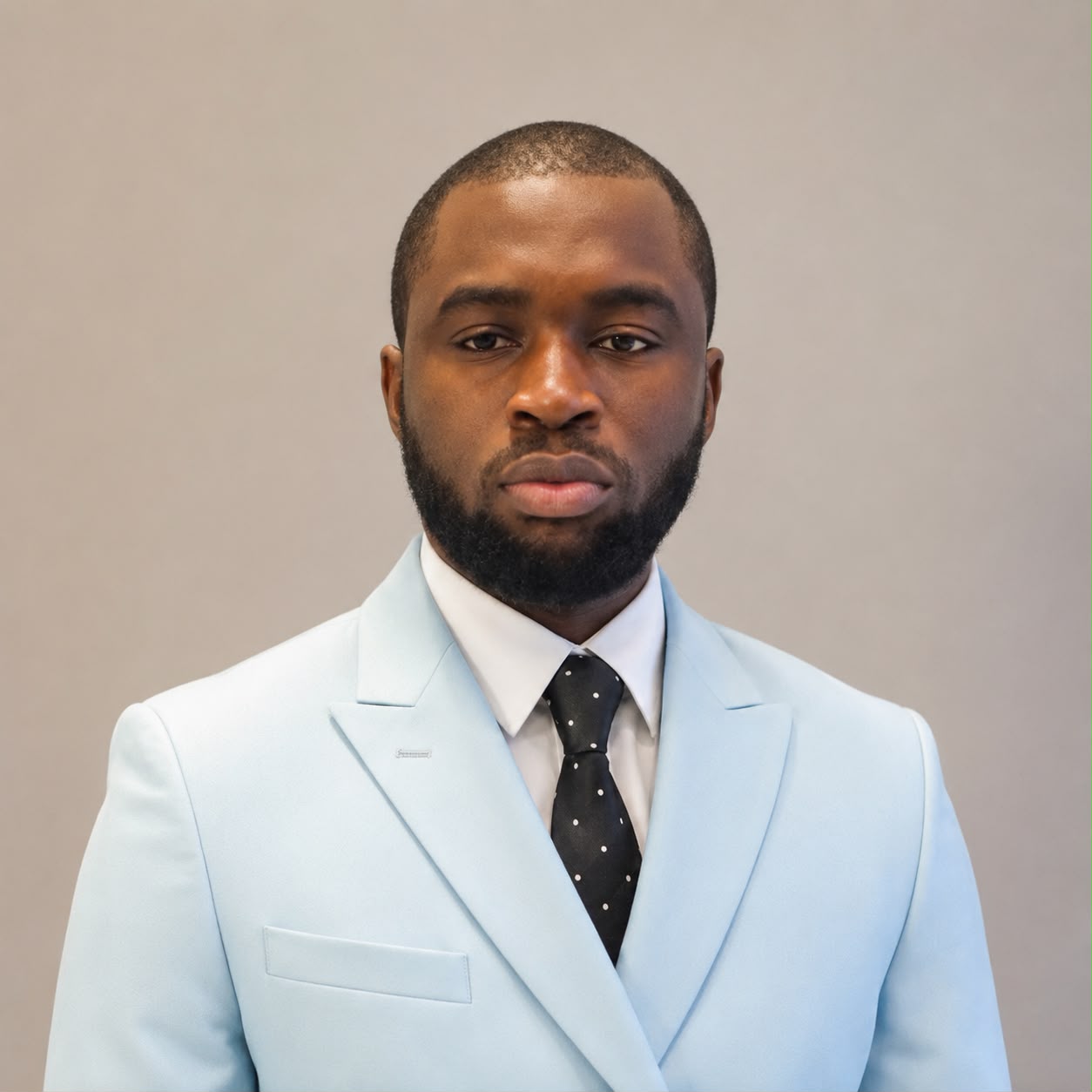
I'm Frederick, and I'm the one building GestureKey.
It started with my niece. She has cerebral palsy. She's bright, curious, and full of personality, and she's found her own ways to navigate the world. She uses her iPad. She figures things out. She adapts in ways that genuinely amaze me.
But there's one thing that still frustrates her, and I've watched it happen enough times that it stayed with me: communicating with her friends and the people around her through her devices.
Think about what the rest of us take for granted. You want to send a message, you type it. The technology bends to you. For someone with a motor disability, that same device sitting right in front of them can become a wall, not because they don't have something to say, but because the input methods we've built assume a standard of physical ability that not everyone shares.
I watched her get frustrated, not at her disability, but at the gap between what she wanted to do and what the technology allowed her to do. I had the skills to work on that gap. So I did.
"My niece doesn't need sympathy. She needs systems that work for her."
Frederick Opoku-Afriyie, Founder, GestureKeyOutside GestureKey, I work remotely as a Technology & Product Manager for The International Lens, take on freelance web development work on the side, and volunteer doing IT support at Staywell New Malden, helping older people get more comfortable with the technology already in their homes and lives.
I've spent my career moving between product, engineering, and research, and I keep coming back to the same pattern: powerful tools get built, and the people who could benefit most from them are often the last to be designed for. GestureKey is my attempt to close one version of that gap myself, using the skills I already have rather than waiting for someone else to.
I hold an MSc in Computer Science (Merit) from St Mary's University London. More of my work: frederick-opoku-afriyie.netlify.app and github.com/fredopoku.
Who this is for
GestureKey is for anyone who finds typing on a keyboard or touchscreen difficult, unreliable, slow, or impossible. That includes people with motor impairments, people recovering from an injury, older adults with reduced dexterity, and anyone who'd rather not fight their hands just to send a message.
GestureKey never asks what condition someone has. It doesn't need to. A short calibration session learns how a specific person's hands actually move, and the system adapts from there. Someone with a tremor, someone using one hand after a stroke, and someone with a broken wrist can all go through the exact same setup and come out the other side with a system built around their own movement, not a diagnosis they had to disclose.
Three commitments
Privacy by default
Everything runs on your own device. No condition to disclose, no calibration data leaving your computer unless you choose to share it.
Open research
Session data, accuracy results, and what actually helps people type faster get published openly, not kept as a competitive secret.
Community partnership
Built with input from the people actually using it, not designed in isolation and handed down.
Where revenue goes
GestureKey doesn't generate revenue yet, so there's no fixed percentage to publish here, and I'd rather say that honestly than make up a number. What I can commit to is the intent: once GestureKey does generate revenue, a share of it goes toward helping people with disabilities actually get to use it, including funding the devices some people would otherwise be priced out of, a basic tablet to run GestureKey on, for someone for whom that's the only barrier between them and being able to communicate.
I can't build this alone
GestureKey is one person's project so far, me, building this because I kept running into the same gap and got tired of waiting for someone else to close it. It won't reach everyone who actually needs it if it stays that way.
I'm not looking for a specific kind of person. If you've got time, a skill, an idea, or you just want to be useful, that's enough of a reason to reach out. Two things would help enormously right now, getting the gesture choices reviewed by someone who actually knows sign language, and hearing from occupational therapists or speech-language pathologists about where this genuinely helps and where it doesn't, but that's not a checklist, it's just what's front of mind today. If you're reading this and thinking you could help, you're probably right.
The goal isn't to stay a one-person project. It's to build a real team around this, properly, with the right people, not just whoever's available. That's already underway, and every conversation that starts here is part of how it happens.